
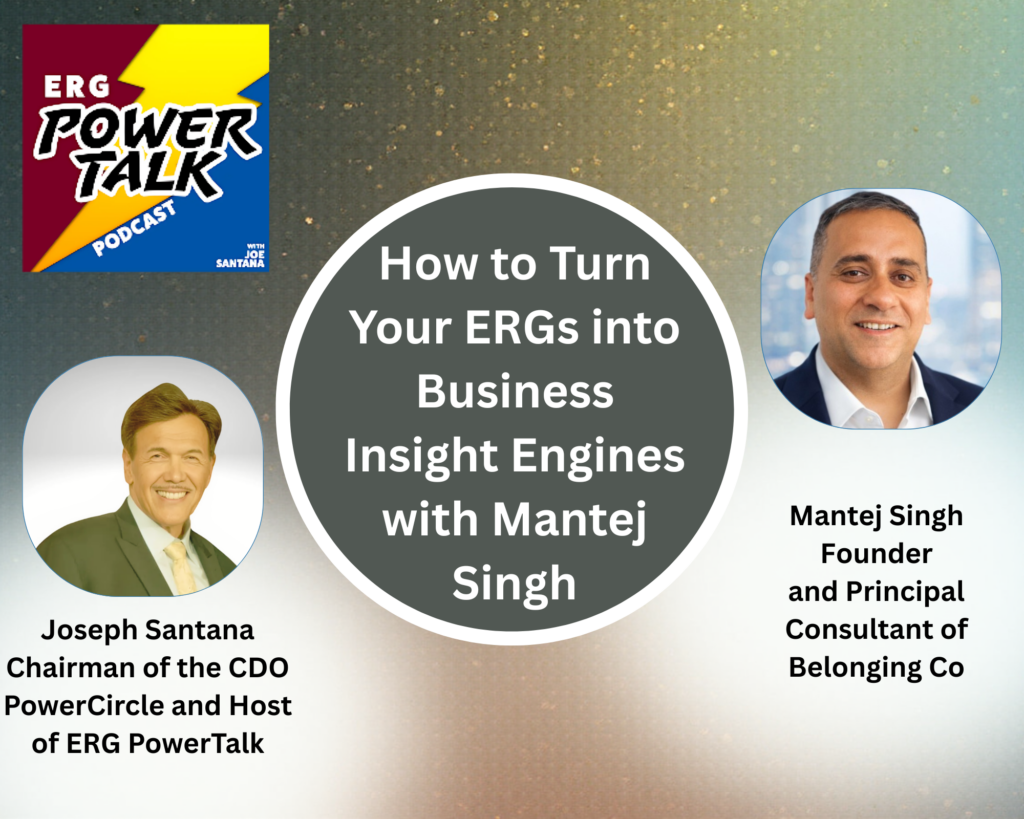
Inside many organizations, critical decisions are made without the benefit of frontline insight. Decisions move forward based on assumptions formed at the top, while the people closest to customers, the workplace, and daily operations hold information that never reaches decision-makers. ERGs can help to close this gap. Yet in many companies, their input is filtered, distorted, or sidelined, while they are kept busy planning celebrations and staging speaker series. The result is workforce, workplace, and marketplace decisions made without on-the-ground facts and perspectives, leading to lost revenue, higher costs, and missed market opportunities.
Mantej Singh, founder of Belonging Co. and a strategist with over 20 years of experience advising government agencies and corporate leaders in Australia, focuses on inclusion strategies that produce operational and community outcomes. A central result of his work is to capture ERG insights and convert them into measurable performance improvements.
In this discussion, Singh highlights a consistent pattern of failure in many organizations. Most ERGs operate within what he describes as a “control, contain, comply” system. Within that system, ERG insights are constrained, shaped to fit the assumptions of people removed from day-to-day realities, or ignored altogether. Leaders can point to having active ERGs, but the bigger value those groups can provide is lost. As a result, ERGs remain in a decorative role rather than contributing to decisions that affect performance.
Singh also outlines how to correct this. When ERGs operate as independent insight engines, he explains, their contribution becomes valuable inputs into the organization’s shaping of efforts and decisions. In one example he shared, ERG input helped shape the design of a highly effective training program by grounding it in real employee experience. The organization funded and executed the solution, while the ERG ensured it addressed the right problem. That separation, where ERGs drive insight, and the organization owns and drives execution, is where measurable impact is created.
What this Episode Asks ERG and Inclusion Leaders to Do
- Position your ERG as a source of business insight, not a center of activity.
- Insert ERG input at the beginning of decisions, not at the end.
- Focus on two or three issues that drive business impact.
- Stay disciplined about driving insight, not performative execution.
This discussion reframes how ERG value should be defined and where effort should be applied. It makes the case that shifting from performative activity to generating and sharing actionable insight increases impact. For more on how to turn your ERGs into business insight engines, listen to the full episode.
Or you can access it on your favorite podcast platform by clicking here!